Tuesday, April 21, 2020

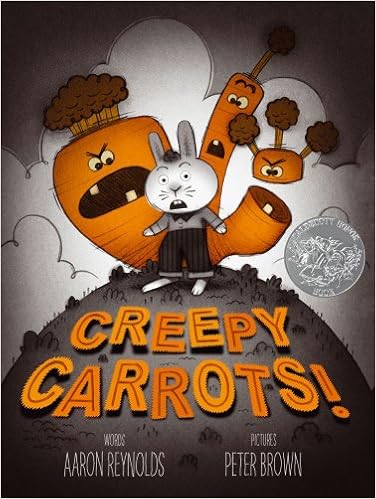
Creepy Carrots! by Aaron Reynolds and Peter Brown


Reynolds, A. & Brown, P. (Illus). (2012). Creepy carrots! Simon & Schuster.

This Caldecott honor book can be used as an introduction to the idea of personification, but there's also other figurative language as well.  Jasper the rabbit takes his carrots seriously, but when he starts seeing them in unexpected places, he starts to think something creepy is happening to him.  

School Library Journal, Publishers Weekly

Monday, April 20, 2020

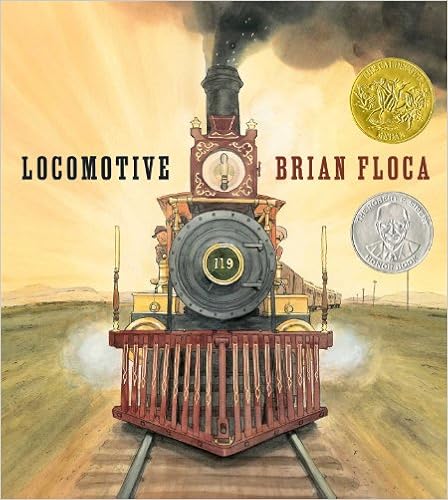
Locomotive by Brian Floca


Floca, B. (2013). Locomotive. Atheneum.

This Caldecott award winner follows a family as they travel west on the transcontinental railroad.  It has many examples of onomatopoeias, as well as personification (the train)

School Library Journal, Booklist

Library/Classroom Use:  This text is an exemplar of how words and illustrations can communicate different information, yet work together artistically.  For middle elementary students, I would use the maps to pivot into a study of westward expansion and the transcontinental railroad.  For primary students, creating a classroom A-Z book with vocabulary (railroad) words from the story could be an extension.  Floca discusses his writing process and how he adjusted his story midway when he found factual information about the time period that did not work in his story (see this article for more information). 

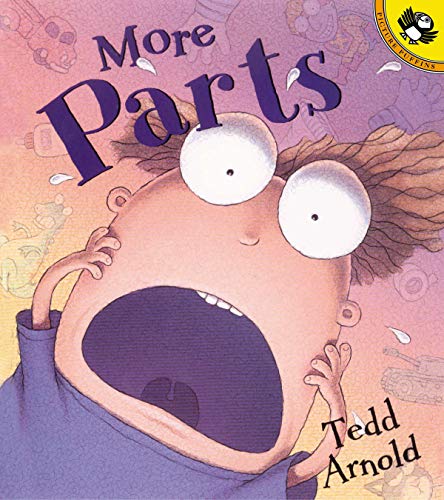
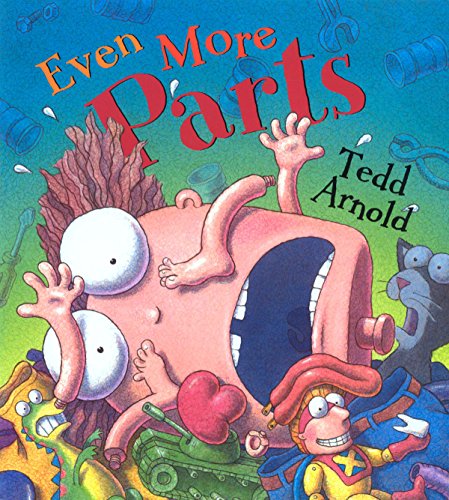
More Parts; Even More Parts by Tedd Arnold

Image source: https://m.media-amazon.com/images/I/51BJWjP3GRL.jpg
Image source: https://m.media-amazon.com/images/I/61Oe8uYJEWL.jpg

Arnold, T. (2004). Even more parts. Penguin Group.
Arnold, T. (2001). More parts. Dial Books.

These hilarious continuations of the original Parts book by the author of the Fly Guy series contain many examples of idioms. The illustrations reflect the literal meaning of the idioms instead of the actual, cultural meaning, to great comic effect.

School Library Journal

Library/Classroom Use:  Studying idioms with these books is a must.  Activities such as illustrating the literal and actual meanings of idioms (possibly collaboratively with art), researching the history and origin of the idioms from the books, acting them out in pairs like charades, and using them as story starters are all possibilities.  An author study on Tedd Arnold would also be popular at the elementary level. 

Sunday, April 19, 2020

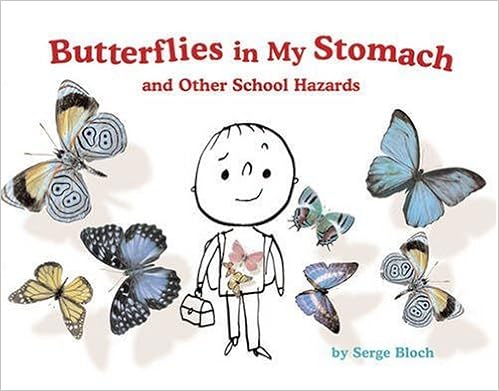
Butterflies in my Stomach and Other School Hazards by Serge Bloch

Image source: https://images-na.ssl-images-amazon.com/images/I/51xPdeQTZsL._SY389_BO1,204,203,200_.jpg
Block, S. (2008). Butterflies in my stomach and other school hazards. Sterling.

This rare narrative book with idioms tells the story of a young boy on his first day of school.  The simple illustrations convey what the actual idiom would look like (being in a pickle for missing the bus shows the bus as a pickle) which can lead to rich conversation about the idioms' true meanings.

School Library Journal, Booklist

Saturday, April 18, 2020

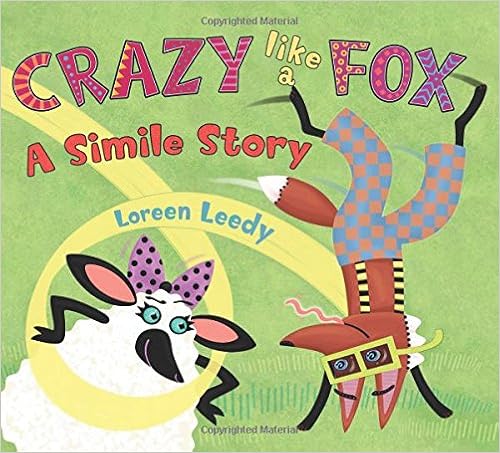
Crazy Like a Fox: A Simile Story by Loreen Leedy


Leedy, L. (2008). Crazy like a fox: a simile story. Holiday House.

Rufus the fox speaks in silly similes and gets his friend, Babette, to chase him all over town.  Eventually, he leads her to her surprise party. This story is packed full of similes, and they are illustrated exactly as they are described (ex. Babette's head on a hornet when she is as mad as one).

Kirkus Reviews

Friday, April 17, 2020

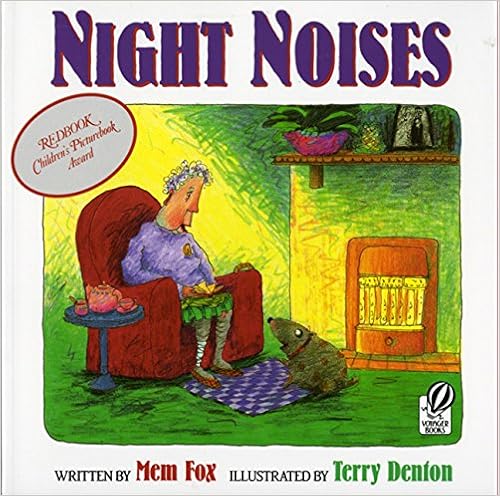
Night Noises by Mem Fox


Fox, M. & Denton, T. (Illus). (1989). Night noises. Harcourt Brace Jovanovich.

An elderly woman, Lily Laceby, sits by the fire with her faithful dog one evening, dreaming of days gone by.  Interesting (and somewhat scary) noises come from outside, alarming her dog. In spite of the suspense, there is a happy ending with her family and friends surprising her with a party.

Kirkus Reviews


Thursday, April 16, 2020

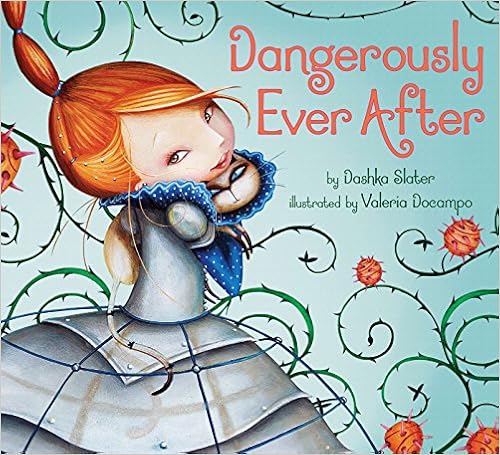
Dangerously Ever After by Dashka Slater

Image source: https://images-na.ssl-images-amazon.com/images/I/61PAskhtg2L._SY453_BO1,204,203,200_.jpg
Slater, D. & Docampo, V. (Illus). (2012). Dangerously ever after. Dial Books.

This princess is not like typical princesses; she likes dangerous, scary, and sometimes, ugly things.  The average person (or prince) might need armor to go in her garden. When a prince gives her a gift of roses, she sets off on a journey to find out how to grow them herself.

Publishers Weekly